In Loving Tribute: William James Austin, Black Korean War Veteran
Why I’m Honoring Him Now
I’m writing this while this country is at war with Iran again, watching another generation of service members deploy into a conflict most of them didn’t choose and won’t get to define the terms of.
That’s exactly why I keep coming back to my grandfather.
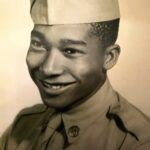
William James Austin served in a war this country needed fighting more than it needed him specifically, and he came home to the same racism and lack of liberty he left.
Service didn’t buy him equality. It rarely buys the people who give the most of it very much at all.
I’m not writing this to take a side in a war I can’t fully see from where I sit.
I’m writing it to name a pattern I refuse to look away from: the men and women carrying this country’s wars on their backs are so often the same communities the country benefits from least when they come home.
Honoring my grandfather means honoring that truth too, not just the courage, the cost.
So while I honor every service member carrying that weight right now, this is still, first, about one man.
Honoring a Man of Quiet Bravery
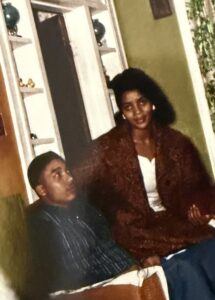
While burying my grandmother, Zella “Zet” Austin, on 6/9/2025, I stood at the resting place of my grandfather, my Dad’s dad, William James Austin, a man I’d never met but whose courage echoes across time.
Private Austin served in the Korean War (1950 to 1953), stepping into a brutal conflict that altered the course of modern history.
Though often called “The Forgotten War,” Korea was America’s first major Cold War showdown, demanding immense resilience from soldiers such as my grandfather.
His sacrifice reminds me that legacy is built in quiet service, not headlines.
Witness to Frozen Fronts and Fierce Fire
I can only imagine the icy winters, steep mountain battles, and emotional toll he endured. Over 1.8 million Americans served; more than 36,000 died.
The war ended in a stalemate, roughly along the 38th parallel, but it cemented the division of Korea and the ideological divide that still stands today.
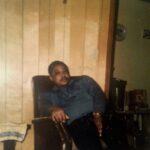
A Legacy of Courage and Service
William James Austin represents a generation of soldiers who fought for democracy abroad, even as they faced racism and inequality at home.
His story is not just his own; it’s a symbol of collective courage, dignity, and hope that resonates through his family and empowers Black Americans through legacy and economic resilience.
🕊️ Legacy Tribute: Resting in Sacred Ground
My grandfather is laid to rest at Restvale Cemetery in Alsip, Illinois, a place of deep historical and spiritual significance.
More than just a cemetery, Restvale is hallowed ground. It was one of the few sanctuaries during the segregation era that welcomed Black families when others would not.
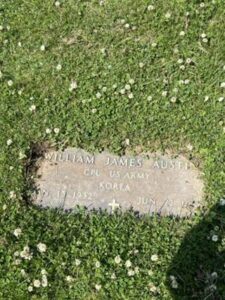
Founded in 1927, Restvale became a safe harbor for our people in death, just as we had to fight for dignity in life.
In a time when racism sought to separate even the deceased, Restvale stood as a quiet act of resistance, a place built by us, for us, with honor and care.
To know that my grandparents rest among pioneers, veterans, musicians, healers, and everyday heroes is to know that they are part of a legacy greater than any one name.
Their presence at Restvale is not an end, but a continuation of a sacred lineage: strength, resilience, and cultural pride.
They are buried not in obscurity, but in a cemetery that remembers.
In soil that holds soul. On grounds where blues legends, community leaders, and generations of Black excellence have found peace.
Their names belong to history. And I will not let them be forgotten.
🎶 Cultural and Historical Significance
Restvale’s story extends past any one family, mine included.
- Restvale holds the graves of over 30 major blues and jazz artists, including legends like Muddy Waters, Willie “Big Eyes” Smith, Earl Hooker, Magic Sam, and Hound Dog Taylor, making it a landmark of Chicago blues history.
- Its cultural importance is reflected in how the blues community, fans, and musicians alike still honor the site. Even the Rolling Stones have reportedly visited Muddy Waters’s gravesite in tribute.
- As a historically Black cemetery, Restvale reflects the migration and establishment of Chicago’s African American population in the early 20th century.
- It sits within a cluster of notable cemeteries, including Burr Oak and Holy Sepulchre, that collectively map important narratives of community, race, and heritage in Alsip and the broader Chicago area.
🗂️ Researching Black Korean War Veterans’ Service Records
If there’s a name like his sitting unresearched in your own family history, here’s exactly where to start. To learn more about a Black Korean War veteran’s official military service:
1. National Archives (NPRC in St. Louis)
- Most service files (called OMPFs) for Korea-era veterans are housed here.
- Request via GSA Standard Form 180 or using eVetRecs online.
2. What You’ll Likely Find
- DD214 (separation report), unit assignments, rank, awards, duty stations, and more.
3. Potential Hurdles
- A 1973 NPRC fire destroyed many records, but alternate documents, such as unit logs and casualty lists, often help.
4. Next Steps Checklist
- Complete SF-180 (estimate dates if unknown).
- Provide proof of kinship (for example, a death certificate).
- Submit by mail or via eVetRecs, then allow time for processing.
💪🏾 Stories of Black Veterans in the Korean War
My Grandfather William was part of a larger legacy: Black soldiers whose courage increasingly shaped both military and social change.
1. A Timeline of Breaking Barriers
- The Korean War saw roughly 600,000 African American servicemen, about 9.3 percent of US fatalities.
- President Truman’s Executive Order 9981 (1948) initiated military desegregation, but in 1950, many units remained all-Black.
2. Valor Under Racism
- The 24th Infantry Regiment, an all-Black unit, fought fiercely despite heavy casualties and experienced tragic mistreatment, including friendly fire.
- Heroic Black soldiers were awarded the Medal of Honor. Pvt. William H. Thompson and Cpl. Cornelius Charlton was among the first Black soldiers honored in Korea.
3. Voices of Black Veterans
- Charles Rangel fought in Korea and returned home as a Congressman and a civil rights advocate, showing how war forged leaders.
- Lt. Col. George Hardy flew bomber missions in Korea after serving with the famed Tuskegee Airmen, representing a legacy of excellence.
- Some, like 1LT Leon Gilbert of the 24th Infantry, faced severe racism and legal battles when they refused orders amid unlivable conditions. His case sparked national attention on military integration.
4. Remembering Forgotten Narratives
- Works like “Twice Forgotten” and “Firefight at Yechon” share firsthand stories of Black soldiers facing racism in battle and seeking recognition afterward.
- The Korean War Legacy Foundation preserves oral histories of veterans like Victor Burdette Spaulding and Congressman Rangel.
🌱 Why This Matters to Me
William’s story is one thread in that larger record. His name is the one I carry.
Meeting my grandfather through his story is more than just a family moment; it’s a reconnection to strength, duty, and dignity that runs in my blood.
He fought in a battle that helped shape the modern world, alongside many Black soldiers who shifted both military culture and society’s moral compass, and came home to the same country that never fully reckoned with what it owed them.
I do this work now as an Identity Reconstruction Guide, and standing at his grave was where a piece of my own reconstruction actually began, long before I had language for what I do.
Learning William’s story didn’t just teach me about a man I’d never met. It started answering questions I had been living inside without knowing how to ask them: who I am, why I’m here, and where I actually come from.
None of that was an accident. My parents met, built their lives, and had me, and inside that ordinary unfolding I was placed, on purpose, as a direct descendant of this one man’s legacy, without ever meeting him in person until I stood over his grave.
I didn’t choose to be his granddaughter. I was positioned to be. And reconstructing identity for the people I guide starts with the same thing it started with for me: being willing to trace your own story all the way back to the ground it was built on.
Honoring his life deepens our collective memory and ensures the bravery of unseen veterans is never forgotten. And now, as a storyteller, artist, and leader, I am carrying that legacy forward in my own battle for truth, healing, and freedom.
Carrying Legacies Forward
If you’re rebuilding your own sense of identity and legacy after loss, The Rebuild Session is where that guidance begins.
Join and subscribe to the Soulful Sanctuary at the Jamie London Clay Show on YouTube, and opt in to my email list for weekly teachings like this, practical, spirit-led, and built for real life, so you stay connected and don’t miss what’s next.
From disruption to wholeness. Rebuilding with you. Jamie, from the Soulful Sanctuary Frequency.
About Jamie London Clay

Jamie London Clay is an Identity Reconstruction Guide, Prophetic Teacher, Truth-Bringer, and Singer, the voice behind the Soulful Sanctuary Frequency. She helps people rebuild stability, identity, and faith after disruption through Spirit-led, whole-person frameworks. Learn more about Jamie London Clay.