AFFILIATE DISCLOSURE
Some links in this article are affiliate links. If you purchase through my links, I may earn a small commission at no extra cost to you. I only share resources I genuinely believe in.
A History of Black Music in the United States: The Foundation, The Convergence, and the Story They Buried
There would be no American sound without Black people.
Not as one influence among many. Not as a thread woven into someone else’s tapestry. As the foundation. The origin. The source that every major American music genre traces back to is revealed when you follow the thread all the way.
This is not a general celebration. It is a reckoning with what was actually built, what was taken, what was renamed, and what survived anyway. And Black music has always survived anyway. That is not an accident. That is a testimony.
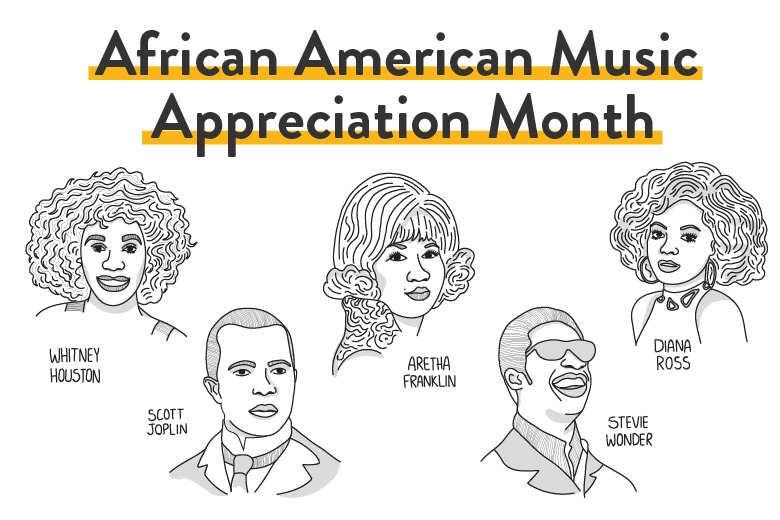
Black Music Month 2026 is themed The Soundtrack Continues. The National Museum of African American Music marks this year as a milestone, five years as the dedicated home of this history, alongside America’s 250th year as a formal nation.
Two hundred and fifty years of a country built on a foundation it has never fully credited to the people who laid it.
I am a singer. I am an Identity Reconstruction Guide. And I carry this lineage in my body the same way every Black person reading this does, whether they know it yet or not. I have done the research. I have traced the pattern. And what I found goes further back than what most people have been allowed to know.
This is the full story. The one that starts where it actually started.
Before the Slave Trade: The Original Musical Tradition on This Land
Most histories of Black music in America start in 1619. That is the wrong starting point.
The dark-skinned, Afro-Indigenous people of this land were already making music here thousands of years before any colonizer arrived.
The archaeological record in the Greater and Lesser Antilles places human presence on this land at least 5,000 years before Columbus showed up—five thousand years of culture, community, and sound.
That one fact changes everything you thought you knew about where Black music actually comes from.
The Taíno people, the dark-skinned Indigenous people Columbus encountered when he arrived in 1492, had a fully developed musical tradition called the Areíto.
It was a ceremonial practice that combined lyrics, movement, and instrumentation to tell the stories of ancestors, preserve history, and transmit identity across generations.
They used the mayohuacán, a hollow wooden drum, the guamo, a conch shell trumpet, maracas, and güiros to carry those stories forward.
Music had such importance in Taíno culture that one of the most valuable gifts a person could offer another was a song. Not land. Not goods. A song. Because the music was the vessel that held everything that mattered. History. Identity. Spiritual connection. Resistance.
When colonizers arrived and began the systematic destruction of everything these people had built, the music survived. Not because anyone allowed it to.
Because it lived inside the people themselves. The Taíno held Areíto ceremonies as direct acts of defiance against Spanish colonizers, singing songs that named what was being done to them. Music is the record that travels energetically and in the body, not on paper.
This is where Black music actually starts. Not 1619. Not 1492. Not with the slave trade. Not in bondage. On free land. With free people. It was already here. Thousands of years before anyone tried to erase them. Ancient, alive, and encoded in the people who walked this soil long before anyone arrived to take it.
The African Diaspora
Before we go further, I want to make something clear.
When historians say Black men arrived in North America as early as 1501 with the first European explorers, that is not the beginning of Black presence on this land. We already established that.
The dark-skinned, Afro-Indigenous people of this land were here thousands of years before any European ship appeared on the horizon.
What 1501 marks is not an arrival. It marks a second wave. Africans were brought by or alongside European colonizers onto land where dark-skinned people already lived.
That distinction matters. Because the story that starts in 1501, or 1619, was never the whole story. It was the part of the story the system chose to document and preserve. The earlier chapter was already being erased.
The exact number of Africans transported to North America through the transatlantic slave trade will never be fully known. Some historians estimate ten million people. Others say fifteen million or more.
What is not disputed is what that number represents. Millions of human beings have been taken from their land, their families, and their communities and forced into a system designed to strip them of everything, including their names.
Slavery took root in the West Indies in the 1600s, and that same century, the mainland colonies began importing Africans directly. By 1649, Virginia had roughly 15,000 white colonists and 300 Black people recorded in its census.
In 1626, the Dutch West India Company brought eleven Black men from Angola to New Amsterdam to work as builders, domestics, and farmhands. Two years later, three Black women arrived from Angola.
Before 1638, Black people were present in New England. By mid-century, they were an ordinary presence across colonial America.
The earliest Africans recorded in the colonies arrived as indentured servants, the same legal status as many white workers at the time.
In 1644, Governor Kieft of New Amsterdam freed the original eleven Angolans and their wives for long service. Through the 1650s, Black indentured servants in Virginia began gaining freedom after serving their terms.
That changed deliberately.
In the late 1600s, the colonies stopped honoring those contracts. People who had been promised freedom waited for papers that never came.
Black slavery moved from custom to law, colony by colony. Virginia in 1661. Maryland in 1663. New York and New Jersey in 1664.
Pennsylvania, Delaware, New England, and the Carolinas followed. By 1700, slavery was the law of the land across all thirteen colonies.
What they could not take, no matter how hard they tried, was the music.
How Race Itself Was Invented
Before we talk about what Black music became, we need to talk about something that shaped everything that followed: race.
Race is not biological. It is not natural. It is not something that has always existed. Race was invented. Deliberately. In the late 1600s and early 1700s, American colonists built the concept of race specifically to justify what they were doing to other human beings.
Historian Barbara Fields put it directly. She said, “American racial ideology was as original an invention of the Founders as the United States itself. They did not discover racial differences. They constructed it.”
The American Anthropological Association confirms this. Race was developed as a classification system designed specifically to justify European conquest and enslavement.
The ideology ranked human beings in a hierarchy with whiteness at the top and dark skin at the bottom.
It portrayed non-white people as culturally primitive, spiritually inferior, and naturally subordinate. That classification then became the legal justification for holding millions of people in permanent bondage.
Here is why this matters in a music history article.
The same ideology that justified enslaving dark-skinned people is the same ideology that later justified taking credit for what those people created. If a system has already decided that a group of people is less than human, it can appropriate their culture, rename it, profit from it, and celebrate itself for preserving it. All without acknowledgment. All without accountability.
That is not a theory. That is exactly what happened. And it started here, with the invention of race as a legal and social tool.
What Survived the Crossing
When enslaved Africans were taken from their homeland, everything material was stripped from them. They could carry nothing across the Middle Passage. No instruments. No artifacts. No written records.
What they carried was inside them.
Memories of music, rhythm, and cultural tradition that were thousands of years old before any of this happened. And they passed it to their children. Their children passed it to theirs.
Generation after generation, under conditions designed to break them, the tradition survived because it lived in the body, not in an object that could be confiscated.
Music in West African cultures was never just entertainment. It was communication. It was a ritual. It was how a community held its history and passed it forward. That understanding of music as something sacred and functional, not decorative, crossed the Atlantic with the people who carried it.
In the colonies, enslaved people sang at communal gatherings and folk festivals. Music became a documented way of maintaining connection to who they were under conditions designed to make them forget.
Over generations, Black communities blended African and Indigenous musical elements with European ones while the ancient foundations held firm underneath. The call and response. The rhythm. The communal participation. The encoding of meaning in sound.
If you want to go deeper on what happens when people leave an institution that no longer holds the fullness of who they are, read The Holy Exodus: What Nobody Is Saying About Women Leaving the Church.
The conversation connects directly to what this section is named about: survival, identity, and finding your way back to what is true when the structure around you has failed.
These did not come from Europe. They came from what was already here and what was carried across the water.
That blending did not erase what came before it. It was built on top of two ancient foundations. The musical tradition of the dark-skinned, Afro-Indigenous people already on this land, whose ceremonial practices, rhythms, and encoded sound we explored in the section above, Before the Slave Trade.
And the musical tradition carried across the Atlantic by enslaved Africans, equally ancient, equally sophisticated, and equally built on the understanding that music is not decoration but a living transmission of identity and survival.
When those two streams met on this soil, under the same colonial assault, they produced something neither could have created alone.
The Convergence on This Land
When enslaved Africans arrived on this land, they did not arrive somewhere empty. They arrived somewhere that already had people, culture, and music thousands of years deep.
The exchange that followed is documented. Africans and the dark-skinned Indigenous people already here shared instruments, rhythms, and ways of using sound to hold the community together.
Nowhere is this more specifically recorded than in Puerto Rico, where the Taíno musical foundation met the West African tradition brought by enslaved Africans working sugar plantations.
Together they produced Bomba, a musical form built on barrel drums, maracas, and call and response singing, used as a communal expression of joy, grief, and resistance.
Colonizers tried to suppress it. They understood exactly what it was doing. Music that holds people together is harder for a system to break.
That is the convergence. Not a blending that erased either tradition. A meeting that carried both forward and produced something the world had never heard before.
That is the origin of what the world would eventually call Black music in America.
The Spirituals: The First Coded Language of Black America
Out of that convergence came the spirituals. And the spirituals were not what they appeared to be.
To the people who enslaved them, the songs sounded like religious conversion. Proof that Black people had accepted their condition and found peace in Jesus. That reading served the system perfectly. It was also completely wrong.
The spirituals were a communication network. Swing Low Sweet Chariot was not a hymn about the afterlife. It was a signal that the Underground Railroad was active and moving.
Follow the Drinking Gourd used the Big Dipper as a literal navigation map pointing north to freedom. Go Down Moses was not simply a retelling of Hebrew scripture. It was a direct reference to Harriet Tubman and the liberation she was leading.
People who were legally forbidden from reading and writing built an entire coded language inside a musical form that their oppressors dismissed as harmless singing. That is not just cultural history. That is one of the most sophisticated acts of organized resistance in American history.
And it was possible because of everything that came before it. The Taíno tradition of encoding survival in ceremony. The West African tradition of using music to transmit what mattered most.
When those two streams converged on this soil, they produced a people who already knew how to carry truth in sound. The spirituals were that knowledge put to work under the most extreme conditions imaginable.
Eileen Southern, Professor Emerita of Music and Afro-American Studies at Harvard University, documented this lineage in full in The Music of Black Americans: A History, Third Edition, the landmark scholarly text that traces Black musical life from the earliest colonial period forward.
It remains one of the most important books written on this subject, and it belongs on every shelf serious about understanding where American music actually comes from.
That is not just cultural history. That is genius. That is the spirit of God operating through people who had every reason to be silent and chose sound instead.
The Smithsonian’s National Museum of African American History and Culture holds significant documentation of this tradition and its role in American history.
What Black Music Built and What Was Taken
From the spirituals came the blues. The first secular musical form Black Americans created, born in the South, was built to name the grief that the rest of American culture had no language for.
Raw. Honest. Undecorated. The blues said plainly what the spirituals had encoded in symbol.
From the blues came jazz. It emerged in New Orleans at the turn of the 20th century, drawing on African rhythm, blues harmony, and the marching band culture of the city.
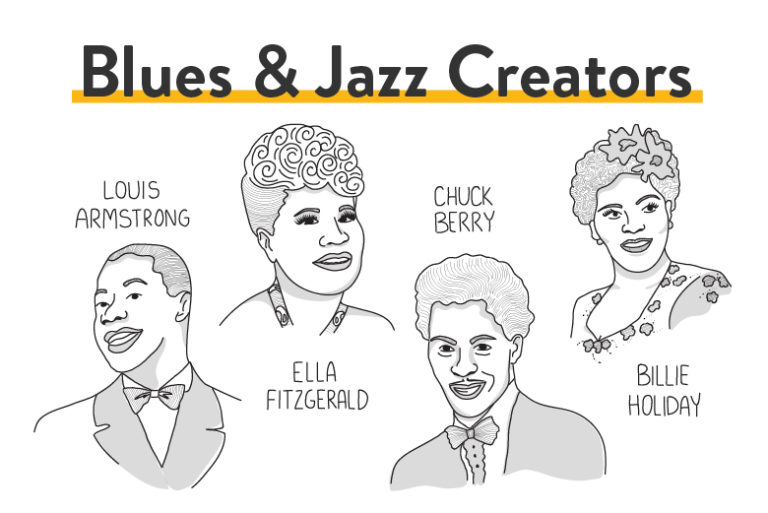
Jazz became the first American musical export to move the entire world. During the Harlem Renaissance, Duke Ellington, Louis Armstrong, and Billie Holiday were redefining what American artistic excellence even meant.
But when the mainstream wanted a face for swing music, they handed the crown to Benny Goodman. Count Basie and Ellington had already built the sound that made them celebrated.
From jazz came gospel. Gospel fused the spiritual tradition with the emotional range of the blues and the energy of the Pentecostal church.
It became the soundtrack of the Civil Rights Movement. When people were being beaten on bridges and jailed for sitting at lunch counters, they sang. That singing was not comforting. It was armor.
From gospel came rhythm and blues. From rhythm and blues came soul. From soul came funk. From funk came hip hop.
Each generation of Black music carried the same thread forward, naming the truth of the moment in whatever form the moment required.
And at every stage, the same pattern ran alongside it.
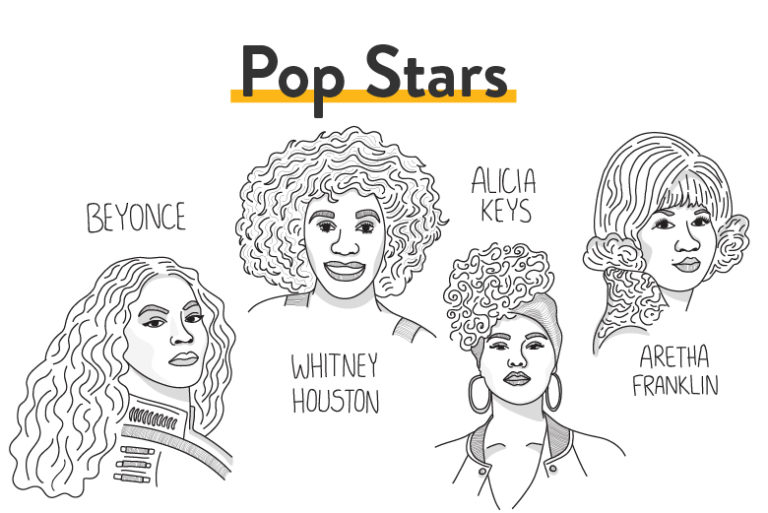
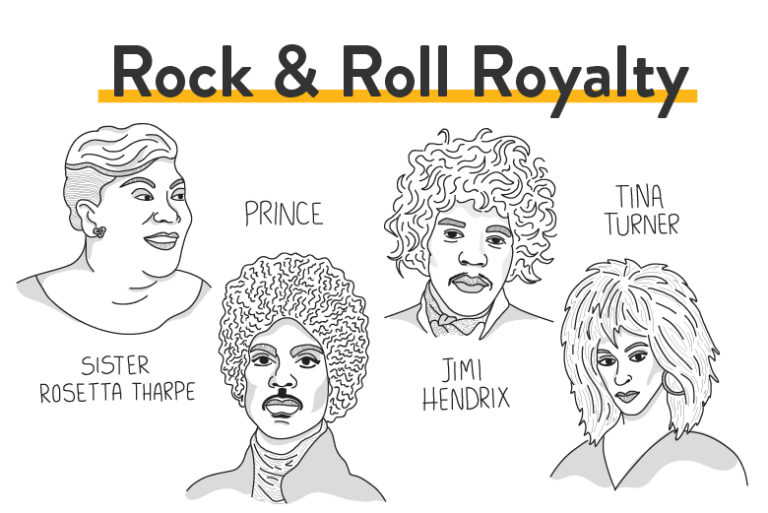
Chuck Berry, Little Richard, and Fats Domino built rock and roll. Elvis Presley became its King, recording music he credited directly to Big Mama Thornton and Arthur Crudup.
The sound was Black. The commercial infrastructure, the radio play, the mainstream promotion, and the crown went elsewhere.
This was not accidental. The American music industry deliberately promoted white performers of Black-originated styles to reach audiences more comfortable with a white face attached to Black sound.
It produced Benny Goodman. It produced Elvis. It produced entire subgenres like blue-eyed soul and rockabilly, built explicitly to repackage what Black artists had already created.
Build it. Watch it get taken. That is the pattern. And it did not stop with rock and roll.
Country Music and the Foundation Nobody Names
Of all the genres built on a Black foundation and then separated from it, country music is the one most people never question.
The image of country music in mainstream American culture is overwhelmingly white. The radio stations, the award shows, the Hall of Fame, the faces on the posters. If you did not know the history, you would have no reason to look deeper. That is exactly how it was designed.
The banjo, the instrument most associated with country music, was created by enslaved Africans. Its roots trace directly to West African lutes documented in Gambia, Senegal, and Guinea-Bissau in the 16th century.
Enslaved Africans brought those instruments and those traditions to the American South. The early artists who would later be rebranded as country musicians drew directly from spirituals, field hollers, and blues.
Black musicians taught white artists the techniques. Black musicians built the sound.
In the 1920s and 1930s, the recording industry deliberately divided music into two separate markets. Hillbilly records for white audiences. Race records for Black audiences.
That separation did not change who created the music. It changed who got credit for it, who got paid for it, and whose face ended up representing it to the world.
Of the 146 members ever inducted into the Country Music Hall of Fame, only three have been Black. The first was not inducted until the year 2000.
That is not an oversight. That is the same pattern we documented in What Black Music Built and What Was Taken, operating in a genre most people never think to question.
The foundation was Black. The institution that was built on top of it told a different story. And that story has been told so long and so consistently that most people have never thought to ask who was there first.
Now you know.
Black Music Month: The Fight for Recognition
Kenny Gamble understood something important when he watched the Country Music Association promote Country Music Month every October.
He was watching an institution celebrate a genre and claim it as American heritage. A genre, as we have established, that was built on a Black foundation. And he decided that Black music deserved the same institutional recognition on its own terms.
Gamble, alongside media strategist Dyana Williams and radio DJ Ed Wright, organized the push for formal recognition of Black music.
On June 7, 1979, President Jimmy Carter hosted the first Black Music Month celebration on the White House South Lawn with performances including Chuck Berry. It felt like a victory. But there was a problem nobody knew about yet.
Carter’s declaration was never officially binding.
Dyana Williams discovered this in the late 1990s. She spent years lobbying Congress, co-writing House Concurrent Resolution 509.
President Bill Clinton signed it into law in 2000. President Obama later renamed it African American Music Appreciation Month. President Biden returned it to Black Music Month.
It took over two decades of sustained advocacy to make official what was already culturally undeniable.
The Smithsonian’s National Museum of African American History and Culture and the National Museum of African American Music both hold extensive documentation of this history. If you want to go deeper into the archive, both are worth your time.
The fight for Black Music Month is itself a mirror of the larger story this article has been telling. Black people build something significant. The institution resists recognizing it. B
lack people have advocated for decades until the record is corrected. The music was always there. The acknowledgment had to be fought for.
That has been the pattern from the beginning. And it has never stopped being the pattern.
Click here to read the proclamation in full!
The Reclassification and What It Did to the Musical Record
There is something nobody connects in mainstream music history. And the reason nobody connects it is that the system that erased it was the same system writing the record.
We have already documented the reclassification project throughout this article. The deliberate renaming of dark-skinned, Afro-Indigenous people from their original Indigenous identities into Negro, colored, mulatto, and eventually Black and African American.
What that reclassification did to the musical record specifically has never been fully named.
When Afro-Indigenous people were legally reclassified on census records and birth certificates, their Indigenous musical heritage was absorbed into their African heritage on paper.
The two streams, the ancient tradition already on this land and the tradition carried across the Atlantic, were folded into one category. The convergence we documented was erased from the official record even as it continued to live in the music itself.
That is why when you look for the pre-1619 roots of Black music in mainstream music history, you find almost nothing. Not because the evidence does not exist. Because the paperwork was rewritten to break the connection.
But here is what the system could not touch.
The call and response that runs from the Taíno Areíto through the spiritual, through gospel, through hip hop. The use of rhythm as a carrier of encoded meaning.
The understanding that music is not entertainment but a living transmission of identity.
These patterns did not appear because of one tradition. They appear because both traditions carried the same understanding.
And when two ancient streams that share the same root meet under the same conditions, the convergence leaves a mark that no census category can erase.
The music is the evidence. It always has been. And it has been telling the truth long before anyone permitted it to.
Music’s Place in American Social Identity
Music in America has never been neutral.
It has always carried race, class, geography, and identity inside it. Not as a side effect. As its core function.
The way music gets categorized, marketed, sold, and credited in this country has always reflected the same hierarchy we documented in How Race Itself Was Invented.
Whiteness at the top. Everything else ranked beneath it and was mined for profit.
The most consistent theme across the full history of American music is this. Black people create a sound. That sound gets coded as too raw, too ethnic, too niche for mainstream consumption.
A white artist records a smoother version. Radio plays it. Labels promote it. The mainstream buys it. And the originators get a footnote, if they are lucky, while the industry celebrates itself for discovering something new.
This happened with blues. It happened with jazz. It happened with rock and roll. It is happening right now with genres that would not exist without Black innovation.
Music also divides along class lines in this country. Symphony orchestras are funded by wealthy patrons and positioned as high culture. Rural folk traditions are dismissed as low culture.
Hip hop, created by young Black people in the South Bronx with no resources and no institutional support, was called noise until it became the most consumed music genre on the planet.
Then the same industry that dismissed it began signing artists, owning masters, and building billion-dollar businesses on a foundation it once refused to take seriously.
The pattern is not complicated. It is just consistent.
What I want you to take from this section is not bitterness. What I want you to take is clarity. Because clarity is how you stop being surprised by the pattern and start building around it instead.
Black music did not become the foundation of American popular culture by accident. It got there because of genius, because of resilience, because of people who kept creating under conditions designed to silence them.
That did not happen because the industry supported it. It happened in spite of the industry. And it is still happening.
The soundtrack continues because the source has never run dry.
What the Pattern Reveals
Quincy Jones spent six decades shaping American music. Twenty-eight Grammy Awards. A career that touched every genre, every era, every major artist of the 20th century.
In an interview with journalist David Marches, Quincy was asked one direct question. If he could fix one problem in this country, what would it be?
He did not hesitate.
“Racism. I’ve been watching it for a long time, the ’30s to now. We’ve come a long way, but we have a long way to go. You have always known where you stand in the chaos of the South. The racism in disguise is covering the North. You never know where you stand. That’s why what is happening now is good, because people are saying they are racists who didn’t use to say so. Now we know.”
One of the greatest musical minds this world has ever produced named racism as the single thing he would fix. Not the industry. Not the contracts. Not the royalty structures. Racism.
Because he understood, as we have traced throughout this entire article, that every other problem in the music industry is a symptom of that one root.
As I have researched and written this piece, as a singer, as an Identity Reconstruction Guide, as a dark-skinned Black woman who carries this lineage in her body, I have reached the same conclusion Quincy reached. Not from bitterness. From evidence.
The pattern is not complicated. It is consistent. Dark-skinned people built a musical tradition on this land thousands of years before anyone arrived to take it.
That tradition survived colonization, the Middle Passage, enslavement, legal segregation, and systematic appropriation. It survived because it lived in the body, not on paper.
And every time the system tried to separate the music from the people who created it, the people created more.
That is not just history. That is a testimony.
And here is what sits underneath all of it. Race as a legal and social system was invented in America, deliberately, in the late 1600s and early 1700s. Historian Barbara Fields documented it plainly.
American racial ideology was as original an invention of the Founders as the United States itself. They did not discover racial differences. They constructed it. Gave it legal standing.
And then used it to justify taking credit for what dark-skinned people built, including the music that became the foundation of American culture.
That is the reason I can say with full authority, grounded in documented research and lived experience, that there would be no American sound without Black people. Not as a contribution. As the foundation.
That same pattern, music history, racial history, and the legal record, is exactly what I go deeper into in Black History They Don’t Teach You: The Pattern We Can No Longer Ignore, where I trace the documented record from Juneteenth through the verdicts of 2026 and connect it to everything happening right now.
Racism is one of the most damaging, illogical inventions in American history. But its origins, and the way it shaped who gets credit for what was built are documented and traceable.
As I have pondered Quincy’s words across this research, it became essential for me, as a singer and musician myself, to understand exactly where all of this comes from.
What This Means for You
If you are Black and reading this, I want you to sit with something for a moment.
Everything this article has documented, the ancient musical tradition already on this land, the survival intelligence carried across the Middle Passage, the convergence that produced something the world had never heard before, the coded spirituals, the blues that named what nothing else would, the jazz that conquered the world while its creators were still being denied basic rights, the gospel that held a movement together, the hip hop that put the truth on record when everything else was trying to bury it, all of that is in you.
Not metaphorically. Literally. It traveled in the body, not on paper. And that means the lineage did not stop with your ancestors. It is moving through you right now, whether you have named it or not.
You did not come from a people who waited for permission to create. You came from people who created under conditions designed to silence them and produced the most influential music the world has ever heard.
That is not inspirational content. That is your actual inheritance.
If you are a creator, a singer, a musician, a writer, someone who carries a voice they have not fully used yet, this history is not background information. It is the foundation you are already standing on. The only question is whether you know it.
And if you are in a season of rebuilding right now, if something has ended or collapsed or simply stopped fitting, hear this. The same people who encoded freedom into a song while living in bondage, who built an entire musical language out of grief and resistance and communal love, those people did not have better circumstances than you.
They had the same thing you have. A voice. A tradition. And the knowledge, whether conscious or not, that what lives in them cannot be taken.
It cannot be taken from you either.
The soundtrack continues. And so do you.
To buy the Music of Black Americans!
Resources and Further Reading
This article was researched and written using primary sources, documented historical records, and the landmark scholarly text The Music of Black Americans: A History, Third Edition by Eileen Southern, Professor Emerita of Music and Afro-American Studies at Harvard University.
If this article stirred something in you and you want to go further into the documented history of Black music in America, that book belongs on your shelf.
If you want to feel this history rather than just read it, come hear it. LadiSoul Sings is my music segment on The Jamie London Clay Show, where I bring this same lineage forward through song. Some truths land differently when they are carried in music rather than words.
If what we covered here touched something deeper, something about identity and who you are after everything that has happened, The Complete You is the whole-person development framework I built for people who are ready to rebuild from the inside out.
If you are in an active season of transition and need a guide who will not rush you, The Rebuild Session is where that work happens one-on-one.
And if you want truth delivered directly to you every week, join the Soulful Sanctuary Notes at https://jamielondonclay.com/the-rebuild-sessions.
👉🏾 The Music of Black Americans, Eileen Southern
👉🏾 LadiSoul Sings on YouTube
👉🏾 The Complete You
👉🏾 The Rebuild Session
👉🏾 Soulful Sanctuary Notes
From disruption to wholeness. Rebuilding with you. Jamie, from the Soulful Sanctuary Frequency.

This article beautifully highlights the incredible legacy of Black music in America. It’s amazing how Black musicians have shaped not only American culture but the entire world, from spirituals to hip-hop. I love how you tied in the story of Quincy Jones. He really embodies the power of understanding music’s roots. It’s also fascinating to see how deeply intertwined music and history are, especially with connections like Juneteenth and the evolution of genres. Celebrating Black music is essential because it’s more than entertainment. It’s a reflection of resilience, creativity, and the human spirit. Thanks for this thoughtful exploration!
Hi Kavitha,
Thank you so much for your thoughtful and heartfelt comment! Your words deeply moved me. You’re right—Black music reflects resilience, creativity, and the human spirit and has profoundly shaped American culture and the global musical landscape.
I’m glad you connected with the story of Quincy Jones. He embodies the power of understanding where music comes from, and his legacy is a beautiful example of how knowing our roots can propel us forward. Juneteenth and the evolution of Black music are woven together in powerful ways. I think celebrating that legacy keeps the stories and struggles of the past alive while inspiring future generations.
Thank you for taking the time to share your appreciation, Kavitha. Readers like you keep these conversations alive and thriving!
Warmly, Jamie