Jamie Unfiltered | Episode 11
I was born on a pew.
Not metaphorically. Literally.
I gave over thirty years to the church—serving, building, pouring out, staying faithful through seasons most people would have walked away from.
And then I became a widow.
And widowhood did something the church never did—it showed me the truth.
Not what the church was supposed to be.
What it had become.
And once you see that gap clearly… You can’t unsee it.
Now the data is catching up to what many women have already lived:
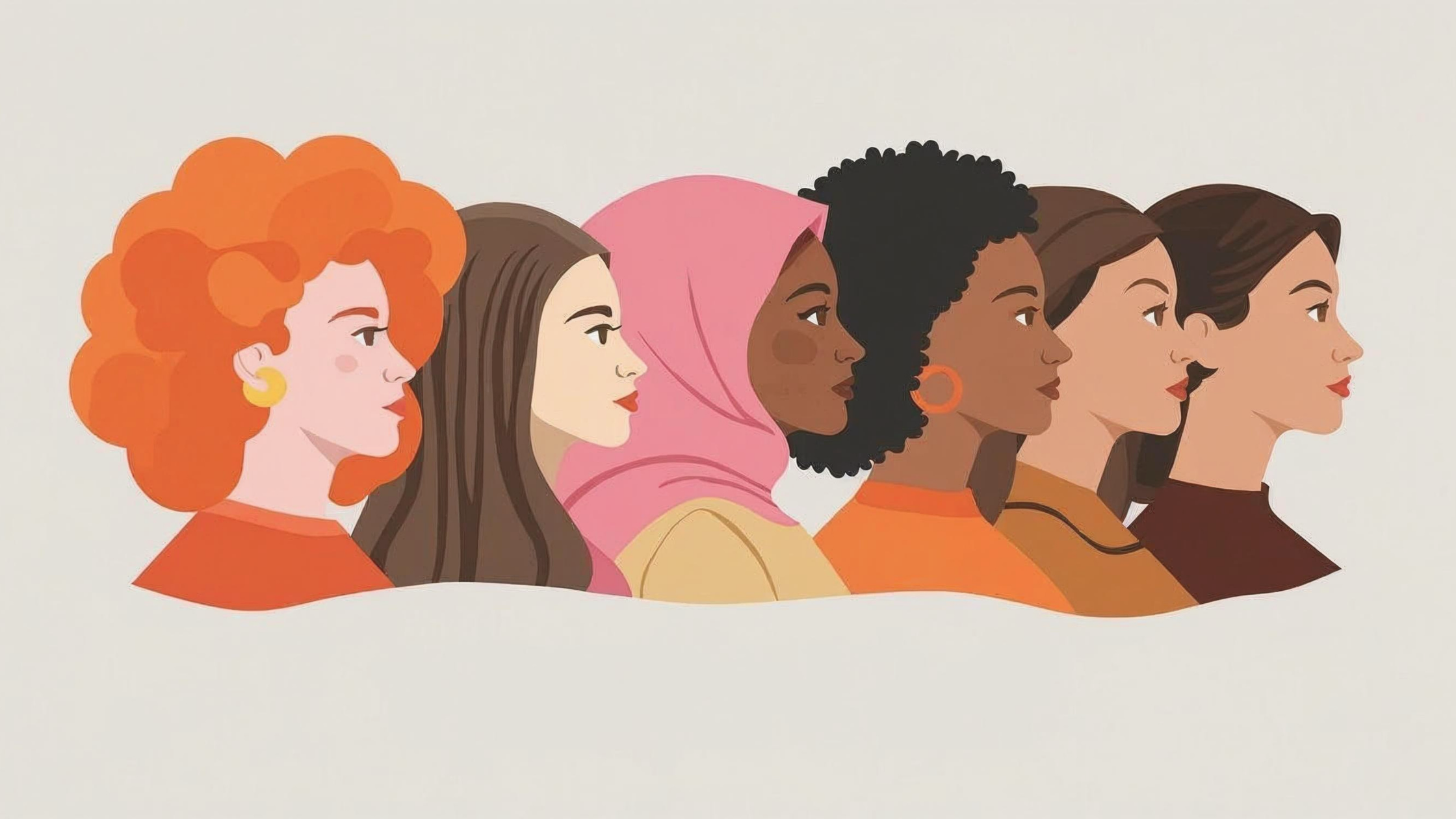
Women are leaving the church.
But the conversation about why is still not honest enough.
The Holy Exodus: Why Women Are Really Leaving the Church
The Data Sparked This Conversation
Earlier this year, leadership strategist Carey Nieuwhof published his annual forecast, 7 Disruptive Church Trends That Will Rule 2026, detailing the seismic cultural and spiritual shifts reshaping religious life in America. The piece surfaced some genuinely encouraging findings — Gen Z leading in church attendance, a measurable uptick in personal commitment to Christ, Bible sales, and Christian music streams on the rise.
But nested inside all of that hopeful data was something the report named but did not fully interrogate: a growing mass departure of people — and specifically women — from institutional church life.
Attendance patterns are fracturing. The percentage of Christians who say faith is central to their lives has dropped from 74% in 2000 to 54% today. Nearly half of American adults now qualify as non-practicing Christians.
People are not walking away from God.
They are walking away from systems that no longer reflect Him.
That distinction matters enormously. And it is the one most leaders are either missing or refusing to address directly.
Before You Quote That Scripture — Let’s Talk About What It Actually Says
The moment this conversation comes up, someone reaches for Hebrews 10:25.
“Forsake not the assembling of yourselves together.”
It gets weaponized quickly. It gets used as a spiritual override — a way to shut down legitimate pain and call it disobedience. Stay in your seat. Get back in line. Don’t forsake the assembly.
Here is what most pulpits will never teach you about that verse.
The Greek word translated as “assembling” in Hebrews 10:25 is episynagoge. It never meant a building. does not mean a denomination, a Sunday service schedule, a membership roll, or any particular religious institution. The word literally means a gathering of people toward one another and toward Christ.
When the letter to the Hebrews was written, there were no church buildings. The early followers of Christ met in homes, in fields, in hidden spaces, in each other’s presence. They were the assembly. Not the structure — the people.
What Hebrews 10:25 was protecting was genuine community: mutual encouragement, burden-bearing, faithful presence, and honest accountability. That is what you cannot forsake.
A woman who leaves a harmful institution but remains rooted in God, community, and truth — she is not violating Hebrews 10:25.
The institution that drove her out through spiritual abuse, exploitation, jealousy, dismissal, and silence—that institution is the one in violation.
Read that again carefully.
Not her. The institution.
What Jesus Actually Did When a Religious Institution Lost Its Way
Some people have been taught that criticizing or departing from a religious institution is equivalent to opposing God. They need to sit with this next section carefully.
Jesus walked into the temple — the most sacred and established religious institution of his time — and he turned the tables over. Literally. He fashioned a whip. He drove people out. He caused a scene that was anything but polite.
He wasn’t having a bad day. He was making a point.
What he was confronting was an institution that had turned worship into commerce, that had partnered with aristocratic power structures to financially drain the very people it was supposed to serve — specifically the poor, the foreigners, the ones with the least access and the least recourse.
The temple was supposed to be a house of prayer for all nations. It had become a marketplace that profited from people’s devotion.
And the religious establishment — the chief priests, the scribes, the principal men who held power within that system — could not tolerate what Jesus was exposing. Their opposition to what he was doing, the threat he posed to their power and their economics, is what drove them to pursue his crucifixion.
Not Rome first. The religious institution first.
Jesus was not anti-God. He was anti-corruption conducted in God’s name.
And there is a long, holy tradition of people who love God deeply choosing to confront — or quietly walk away from — institutions that have confused their own agenda with His.
That tradition did not end in the first century.
What Is Actually Driving Women Out the Door
Let me name what the data won’t.
Women are not leaving because they are faithless. Women are not leaving because they are rebellious, spiritually immature, or easily offended. Women are leaving because of patterns that have remained largely unchanged for generations — patterns the institution has consistently refused to examine.
This isn’t confusion. It’s pattern recognition.
Spiritual abuse. Leadership that uses scripture, authority, and community belonging as tools of control. Theology is deployed not to liberate but to manage. Correction that comes down hard on the vulnerable and never touches the powerful.
Financial exploitation. Women who give generously — their money, their time, their labor — to institutions that would not survive without them, only to find themselves dismissed, underpaid in formal roles, or entirely excluded from financial decision-making.
Jealousy and competition inside sacred spaces. Not in the street. In the sanctuary. Women are being sized up, sized out, and positioned against each other in environments that were supposed to model something different.
The husband dynamic. Let me be plain about this: a woman is not responsible for another woman’s husband’s choices. Full stop. If a man chooses infidelity, he is responsible for that choice. Period. The fact that women in church spaces are made to feel like a threat simply for existing — that is a failure of the institution. Not the woman.
Burnout followed by blame. Women who have served to the point of depletion, who finally say I have nothing left, and are met not with care but with disappointment or accusation.
The absence of any real recourse when harm happens. When harm occurs inside church walls — and it does occur — the institutional response is rarely to protect the person who was harmed. It is to protect the institution, protect its reputation, manage the story, and quietly push the wounded person to the margins or out the door entirely.
Women have learned to read this pattern. And they are choosing differently.
The Nuance This Conversation Cannot Afford to Lose
I want to be clear here, because this matters: I am not calling anyone out of a healthy assignment.
If you are in a community that genuinely covers you, honors you, challenges you to grow, and reflects the love of God to you — that is sacred ground. Stay. Invest. Build something real there.
If you’ve never experienced it, it can be hard to recognize what healthy, spirit-led development actually looks like in community—where identity is formed before strategy, not controlled by it.
👉🏾 (Read: How to Start Your Whole-Person Healing Journey Today)
👉🏾 (Read: From Survival Mode to Soul Alignment)
This is the work I’ll be breaking down deeper in an upcoming Empower Me, Empower You episode—because most people are trying to build a strategy on top of an identity that hasn’t been stabilized yet.
Wherever human beings gather, there will be friction. That is not a sign that something is wrong — it is a sign that real people with real histories are in the room. Friction handled with wisdom, humility, and love can actually strengthen a community. It can produce depth that comfort never reaches.
The problem is that too many institutions have no genuine mechanism for handling harm when it occurs. No real accountability. No restorative process. Just silence, or dismissal, or the quiet exile of the person who dared to say something was wrong.
That is not friction. That is a structural failure.
And God is not in the business of asking His daughters to remain in spaces that are actively breaking them — in His name.
The Download: This Is Not Abandonment. This Is a Reformation.
I woke up with this on my spirit. And I do not say that lightly, because I do not use spiritual language carelessly.
I believe what we are witnessing is not a crisis of faith. It is the beginning of a reformation — not of doctrine, but of relationship. People are not abandoning God. They are abandoning the structures that claimed to represent Him while doing something else entirely.
Women — who have historically been the backbone of the church, who have shown up and served and prayed and held communities together generation after generation — are finally deciding that their backs have carried enough of what was never theirs to carry.
That is not forsaking the assembly.
That is refusing to be used to hold it up.
That is refusing to be the assembly’s floor.
There is a profound difference between the two. And I believe God knows it.
This exodus, for many who are living it, is not the end of their faith story. It is the beginning of the chapter where they stop performing devotion and start inhabiting it.
Where they stop building someone else’s vision at the expense of their own soul and start rebuilding from the inside out.
That rebuilding — the kind that happens after everything familiar has been dismantled — is some of the most sacred and necessary work a human being can do.
That kind of rebuilding doesn’t happen by accident. It requires intentional work—clear thinking, honest reflection, and the courage to rebuild without illusion.
This is the work of becoming—of rebuilding your life in truth, not performance.
Most people stay in confusion because they never move this into a structure.
If you’re in that space right now, this is where structured rebuilding begins.
👉🏾 Step into your next phase → The Rebuild Session
This is the reformation. It is not happening in a council chamber or on a conference stage. It is happening quietly, in the lives of women who decided that an authentic relationship with the divine was worth more than institutional approval.
If This Is Where You Are, You Do Not Have to Rebuild Alone
If you read this and felt something shift — a recognition, a permission, a grief finally named — that response is worth paying attention to.
If you are in the middle of a transition that feels spiritual but also deeply disorienting. If you have lost something — a community, a marriage, an identity, a version of yourself you thought was permanent — and you are trying to figure out who you are and what comes next. If you are done surviving and ready to actually rebuild.
The Rebuild Session is private, one-on-one coaching designed for exactly where you are. Not motivation. Not platitudes. Structured, honest, spirit-led work — with someone who has walked through her own holy exodus and come out the other side with both her faith and her fire intact.
Three tiers. One session to start. Up to six sessions if you are ready to go deeper.
If this didn’t just inform you—but locate you—then you’re not in confusion. You’re in transition.
And transition without structure is where most people stay stuck.
The Rebuild Session is where we take what you’re sensing and turn it into clarity, direction, and movement.
You don’t need more information. You need structure.
👉🏾 If this is where you are, this is the solution → The Rebuild Session
If you’re not ready for that step yet, stay connected to the work.
👉🏾 Join Soulful Sanctuary Notes → Subscribe to Soulful Sanctuary Notes
Now engage:
👉🏾 What has your experience with church or faith communities actually produced—growth or misalignment?
If this gave language to something you’ve been carrying:
- Comment your answer
- Share this with someone who needs it
- Subscribe for more grounded, spirit-led clarity

Watch the full episode of Jamie Unfiltered — The Holy Exodus above. If this reached someone who needed it, don’t just save it. Send it.